
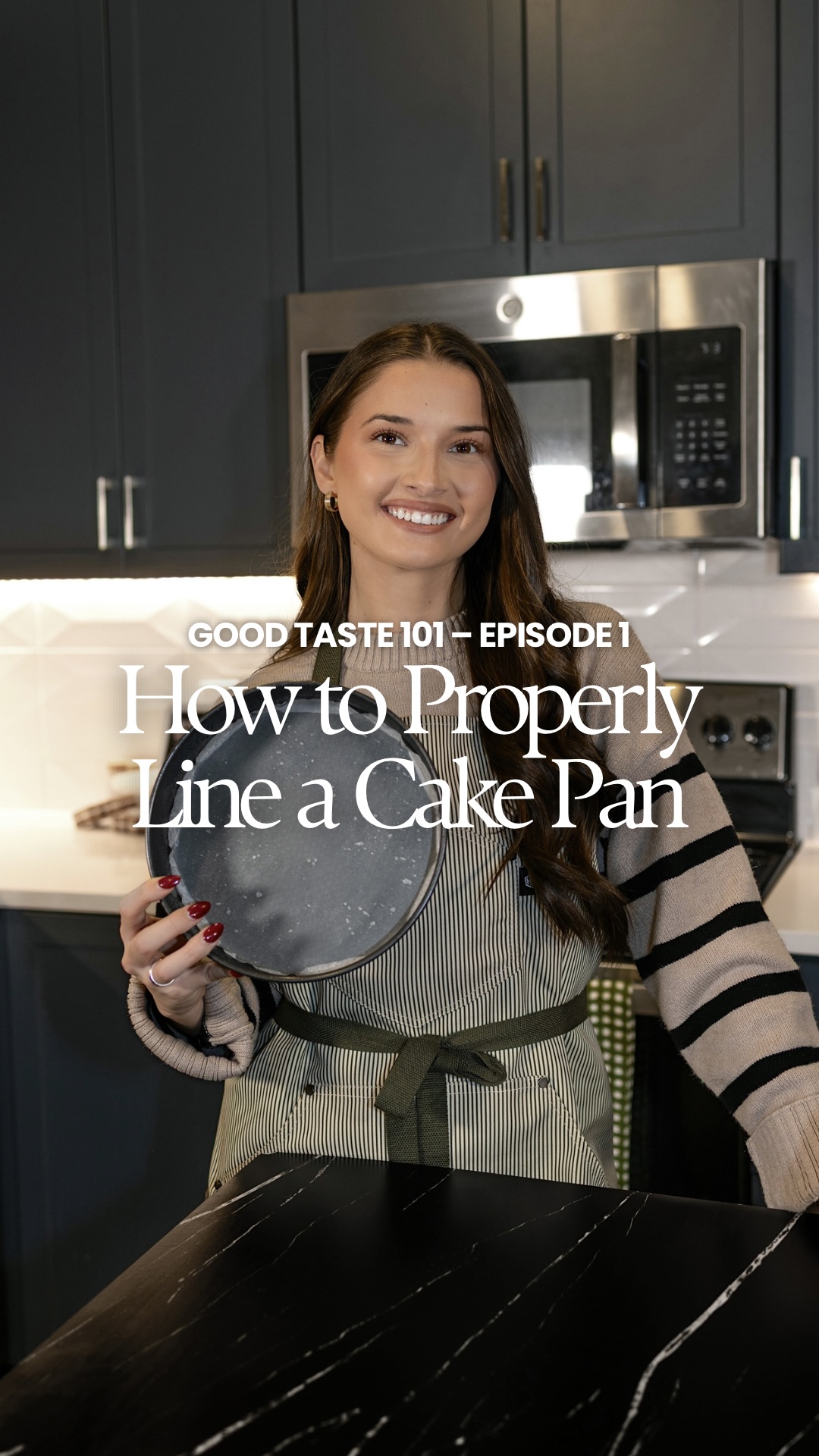
Good Taste 101 — Episode 1
Estimated reading time: 4 minutes
If you’ve ever pulled a cake out of the oven only for it to tear, crumble, or glue itself to the bottom of the pan, this is where everything changes. Lining a cake pan sounds simple, but it is one of the most important skills in baking. It determines whether your cake releases cleanly or becomes a stressful guessing game where you flip it over the sink and hope for the best.
This first Good Taste 101 lesson is meant to slow things down and teach the part that most recipes completely skip. I want you to feel confident before you even pour batter into a pan. When the foundation is right, everything else gets easier.
Table of contents
Why I Started Good Taste 101
Growing up, baking and cooking always felt natural to me because I was taught the little things: the techniques that make recipes work. As I got older, I realized not everyone grew up with someone showing them how to prepare a pan or cream butter or test doneness. These are the steps you only learn if someone physically teaches you, and most recipes assume you already know them.
Good Taste 101 exists to fill that gap. It is judgment free, meant for beginners and anyone who wants the confidence of knowing not just what to do, but why you are doing it. You can learn every foundational skill right here.
Why Proper Pan Prep Matters
Most cakes fail before they ever enter the oven. A well prepared pan gives you:
• Even baking
• Clean edges
• Zero sticking
• An easy release
• A cake that looks intentional, not accidental
Skipping this step is one of the fastest ways to ruin a bake, even if the batter is perfect.
The Rule of Thumb
- Always line the bottom of the pan with parchment
- Lightly spray the sides
- Your parchment circle does not need to be perfect
- Think of this step as non negotiable
Step-by-Step: How to Line a Cake Pan Properly
1. Start with a clean, dry pan
Any leftover crumbs, grease, or water droplets can prevent the parchment from sticking fully. Your pan needs to be completely dry so the paper can grip the bottom.
2. Lightly spray the sides of the pan
Use a light, even mist. The spray helps the cake rise up the sides without catching, but too much spray can fry the edges. If you see puddles, gently wipe them with a paper towel.
3. Place a parchment circle on the bottom
You have two options:
- Buy pre-cut parchment rounds
- Trace the bottom of your pan onto parchment and cut it out
Both work perfectly. The goal is coverage, not perfection. As long as the bottom is fully lined, you will get a clean release.
4. Press the parchment down smoothly
Press the parchment so it makes full contact with the bottom of the pan. Any air bubbles will create uneven spots in your cake. Run your fingers across the surface until it feels flat.
5. Your pan is officially ready for batter
It should look clean, smooth, and lightly misted on the sides. This simple prep step is the reason your cake will pop out effortlessly.

Common Mistakes to Avoid
- Using foil instead of parchment (foil creases cause sticking)
- Overspraying the pan (can cause fried edges)
- Skipping parchment entirely
- Forgetting to flatten bubbles
Troubleshooting For Beginners
Here is how to fix the most common issues before they happen.
If your parchment keeps sliding
Your pan is probably a little wet or greasy. Wipe it clean and start again. Parchment sticks best to a completely dry surface.
If the sides of your cake look fried or too brown
You likely used too much spray. You only need the thinnest layer. Imagine fog on a mirror, not a full coat.
If your cake sticks to the bottom
This is almost always because the bottom was not lined. Even the best nonstick pan cannot replace parchment.
If the parchment bubbles during baking
That means it wasn’t smoothed down. Press firmly around the whole bottom before adding your batter.
If your cake bakes unevenly
Check for wrinkles in the parchment. Any folds can create dips or bumps in the final cake.
Tools You’ll Need
- 8-inch round cake pan (or your preferred size)
- Parchment paper or pre-cut parchment rounds
- Nonstick spray
Related Recipes to Try Next
- Pumpkin Olive Oil Cake
- Pear & Brie Puff Pastry Tart
- Pumpkin Crumb Cake Bars
- Cookies & Cream Layer Cake


Leave a Comment